
Special Care Dentistry
Kids Dentistry / Pediatric Dentistry
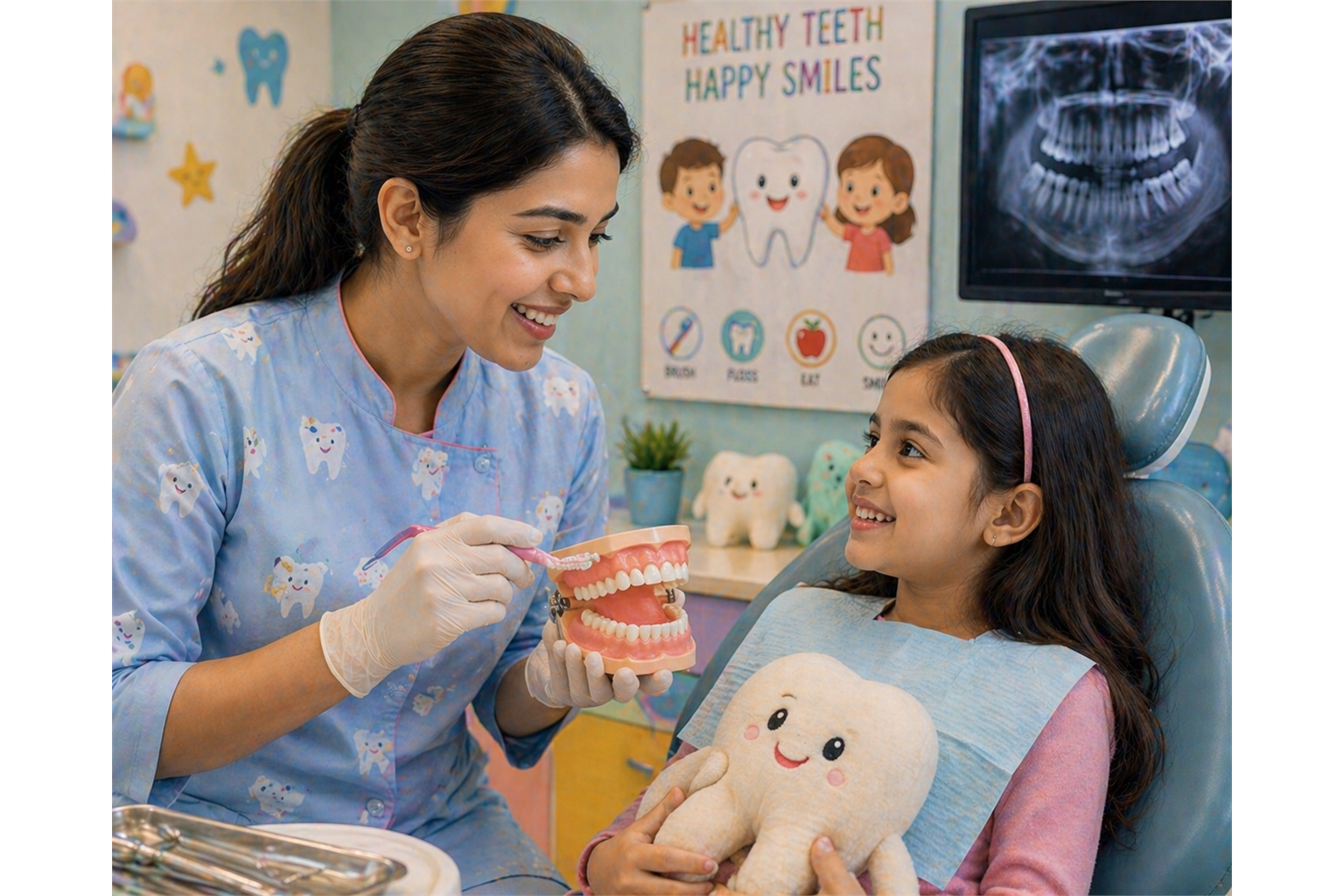
Pediatric dentistry focuses on oral health for infants, children, and teenagers from 0 to 18 years, including prevention, diagnosis, behavior-friendly visits, and treatment of dental issues specific to growing teeth and jaws.
Best For
- Children with tooth decay or early childhood caries
- Thumb sucking, tongue thrusting, or habit-related concerns
- Misaligned teeth or early orthodontic issues
- Delayed or early tooth eruption
- Dental trauma from falls or sports injuries
- Gum infections in children
Procedure
- A friendly introduction helps reduce fear.
- Gentle examination of teeth and gums is performed.
- X-rays may be taken if required.
- Treatment planning is discussed with parents.
- Pain-free procedures use child-friendly techniques.
Benefits
- Prevents long-term dental issues
- Supports proper dental development
- Builds lifelong oral hygiene habits
- Reduces need for complex treatments later
- Helps avoid dental anxiety in adulthood
Notes
- Baby teeth guide proper jaw growth and alignment.
- A pediatric dentist is specially trained to manage children's behavior, dental development, and early oral health problems.
- Preventing early decay matters because it can affect permanent teeth.
Treatments & Procedures
- Preventive care includes fluoride application, dental sealants, and oral hygiene education for parents and children.
- Tooth-colored fillings can restore cavities.
- Pulp therapy treats infected baby teeth to avoid extraction.
- Space maintainers keep space for permanent teeth if a baby tooth is lost early.
- Habit correction appliances can help stop thumb sucking, tongue thrusting, and similar habits.
- Pediatric extraction safely removes severely damaged baby teeth.
- Early orthodontic evaluation identifies the need for braces at an early stage.
Duration
- Routine check-ups usually take 15 to 30 minutes.
- Treatments usually take 30 to 60 minutes depending on complexity.
Tooth Eruption
Primary and Permanent Teeth Timeline
Quick Insight: Full set of 20 milk teeth usually appears by 2.5–3 years. Shedding begins around 6 years.
Primary Teeth (Milk Teeth)
These are the first set of teeth that appear in childhood and later fall out.
Permanent Teeth
These replace milk teeth and are meant to last a lifetime.
Important Notes for Parents & Patients
- Timelines can vary slightly — 1–6 months variation is normal.
- Delayed eruption isn’t always a problem, but consult a dentist if delay is significant.
- Early loss of milk teeth can affect alignment of permanent teeth.
Oral Habits in Children
What’s Normal, What’s Harmful & When to Take Action
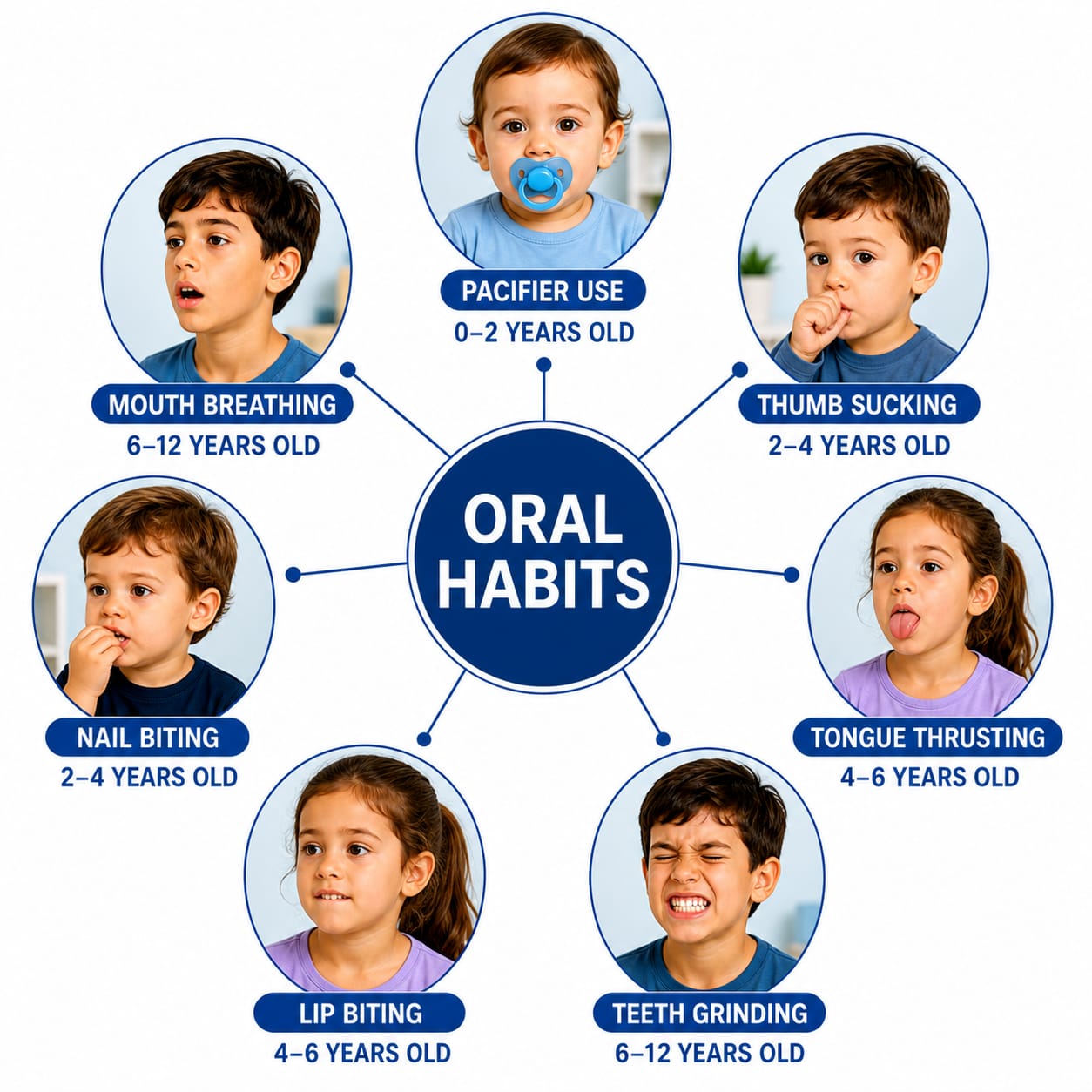
Most childhood habits are normal early on, but when they continue for too long they can affect teeth, jaw development, and speech.
0–2 Years: Don’t Worry, It’s Normal
Babies explore the world through their mouth. These habits are self-soothing and usually not harmful.
- • Thumb or finger sucking
- • Pacifier use
- • Tongue thrust (normal swallowing pattern)


What parents should do:
- • Don’t stop the habit forcefully
- • Gradually reduce pacifier use after 1 year
- • Keep baby engaged with toys and feeding routines
2–4 Years: Start Monitoring
Habits may continue as your child grows. Frequent persistence can begin to affect teeth and jaw growth.
- • Thumb sucking
- • Pacifier dependency
- • Nail biting
- • Early mouth breathing

What parents can do:
- • Use positive reinforcement
- • Identify triggers like boredom or stress
- • Gently remind, avoid scolding
4–6 Years: Important Stage to Act
By this age, most oral habits should stop naturally or with gentle guidance.
- • Thumb sucking (if still present)
- • Nail biting
- • Tongue thrusting
- • Mouth breathing
- • Lip biting

What parents can try:
- • Explain gently why stopping is important
- • Use reminder tools like thumb guards
- • Track progress with reward charts
6–12 Years: Time for Serious Attention
If habits continue into school age, they can cause long-term dental problems.
- • Thumb sucking
- • Tongue thrusting
- • Mouth breathing
- • Teeth grinding (bruxism)
- • Nail biting


Risks:
- • Crooked teeth
- • Jaw growth problems
- • Speech difficulties
- • Need for braces later
Simple Tips Parents Can Follow
- • Stay calm and supportive — avoid punishment.
- • Reward progress, not perfection.
- • Keep your child busy and engaged.
- • Maintain a healthy daily routine.
- • Understand emotional triggers like stress or anxiety.
When Home Remedies Are Not Enough
If your child cannot stop the habit, a dentist can help with safe, effective solutions.
- • Habit-breaking appliances to prevent thumb sucking or tongue thrust
- • Behavioral guidance and child-friendly counseling
- • Myofunctional therapy for tongue posture and swallowing
- • Orthodontic care if alignment is already affected
When Should You Visit a Dentist?
- • Habit continues after age 4–5 years.
- • You notice changes in teeth position.
- • Your child cannot stop despite efforts.
- • Mouth breathing is frequent.
- • Speech problems develop.
Final Takeaway
Early habits are normal, long-lasting habits can become harmful, and early action can prevent future dental problems.
How Prodonto Helps You
- • Connect with trusted dentists near you
- • Get quick guidance through e-consultation
- • Take early action before problems become serious
Cost & Comparison Tables
| Service | India range |
|---|---|
| Consultation | Rs. 300 - Rs. 800 |
| Fillings | Rs. 1,000 - Rs. 3,000 |
| Pulp therapy | Rs. 2,500 - Rs. 6,000 |
| Space maintainers | Rs. 3,000 - Rs. 10,000 |
FAQs
When should a child first visit a dentist?
By age 1 or when the first tooth appears.
Are milk teeth important?
Yes. They are essential for chewing, speech, and guiding permanent teeth.
How can cavities in kids be prevented?
Regular brushing, limited sugar, and routine dental visits help prevent cavities.
Related Treatments